Published -

December 14, 2024

Article.com - Product Execution (Logistics)

Article.com - Product Execution (Logistics)

What to Expect

This case study explores how Article.com transformed its logistics operations by addressing critical challenges through a user-centric approach. It outlines the identified problems, the innovative solutions implemented, and the substantial business impact achieved with a data-driven, iterative methodology.

Understanding the Article-landscape

Article.com is a Direct-to-Consumer (D2C) e-commerce brand specializing in home furnishings and modern furniture. Unique among its peers, Article manages its logistics operations internally—from production and inventory management to moving products from manufacturing facilities to warehouses, and finally to customers' doorsteps. To support this, Article builds and maintains its own suite of tools, including inventory management, demand and sales forecasting, warehousing software, and delivery support platforms.

During my time at Article, I focused on ensuring that internal tools enabled seamless furniture delivery, even when managed by external fleets. Article delivers over 400,000 orders annually across North America, making operational efficiency and customer satisfaction critical.

Article’s 3rd-party delivery network handled 45% of all deliveries, but their performance lagged behind Article’s in-house delivery teams by 30 basis points. This performance gap impacted over 30% of customers, manifesting in:

  • Late or unscheduled deliveries
  • Poor communication before delivery
  • Incorrect order deliveries

These issues led to:

  • Increased customer anxiety, resulting in negative reviews.
  • Higher volumes of reactive resolution, consuming significant time and resources.
  • Inefficient operational management, with limited ability to proactively reduce friction.

GoalsTo address these challenges, we set clear objectives:

  1. Automate Issue Management: Reduce manual touchpoints from 6 to 1.
  2. Proactively Manage Issues: Reduce customer frustration by 60%.
  3. Monitor and Improve Performance: Increase operational visibility by 75%.
  4. Streamline Operations: Reduce application overload and improve efficiency by 50%
Article.com - Product Execution (Logistics)

Approach

The Existing Process

The logistics team was heavily reliant on manual operations:

  • 8 coordinators spent over 50% of their time managing issues and communicating with 3rd parties.
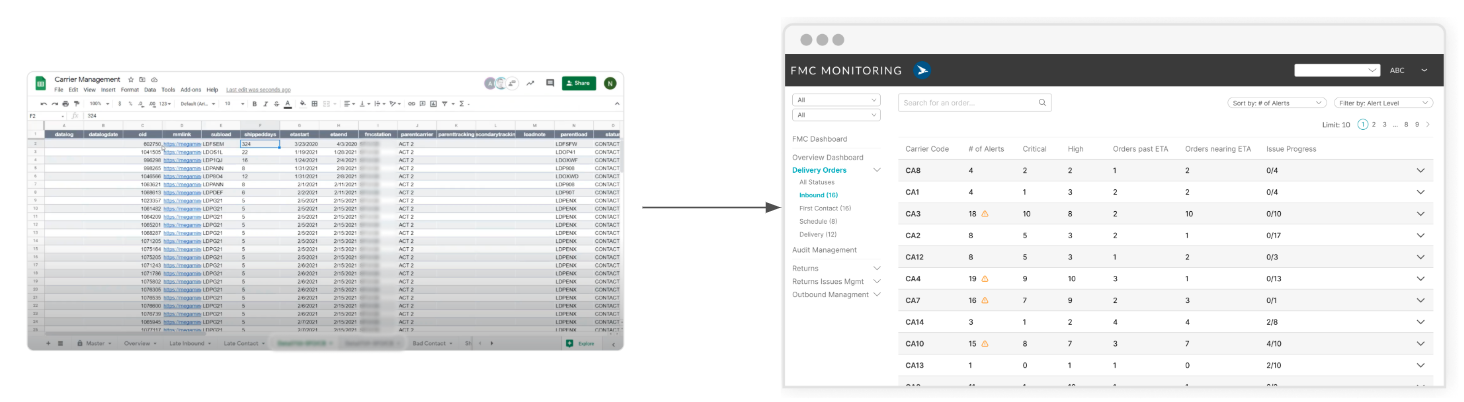
  • Processes were managed in unprotected Google Sheets, resulting in lost data and inconsistent operations.
  • Analytics were handled manually, offering limited insights into the end-to-end supply chain.

Discovery Process

To identify opportunities for improvement, I:

  1. Shadowed the logistics team to understand their daily workflows.
  2. Analyzed customer feedback data to pinpoint friction points.
  3. Conducted process mapping and gap analysis to evaluate system design and technical limitations.
  4. Mapped logistics problems back to customer pain points.

Problem Identification

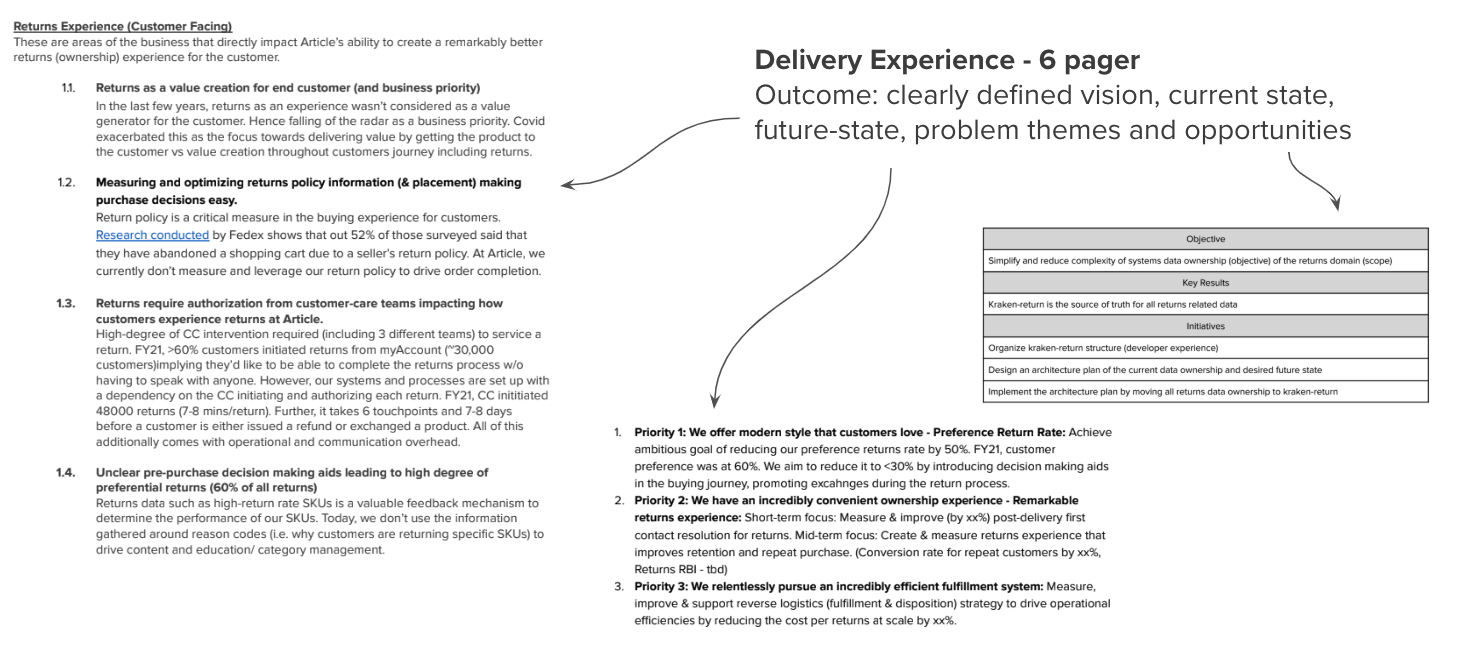
Key insights included:
  • Defining the stages and severity of recurring problems.
  • Identifying the operational features required to empower the logistics team.
  • Establishing key success metrics to measure progress.

Article.com - Product Execution (Logistics)

Iterative Solution Design

Iteration 1: Move Away from Excel

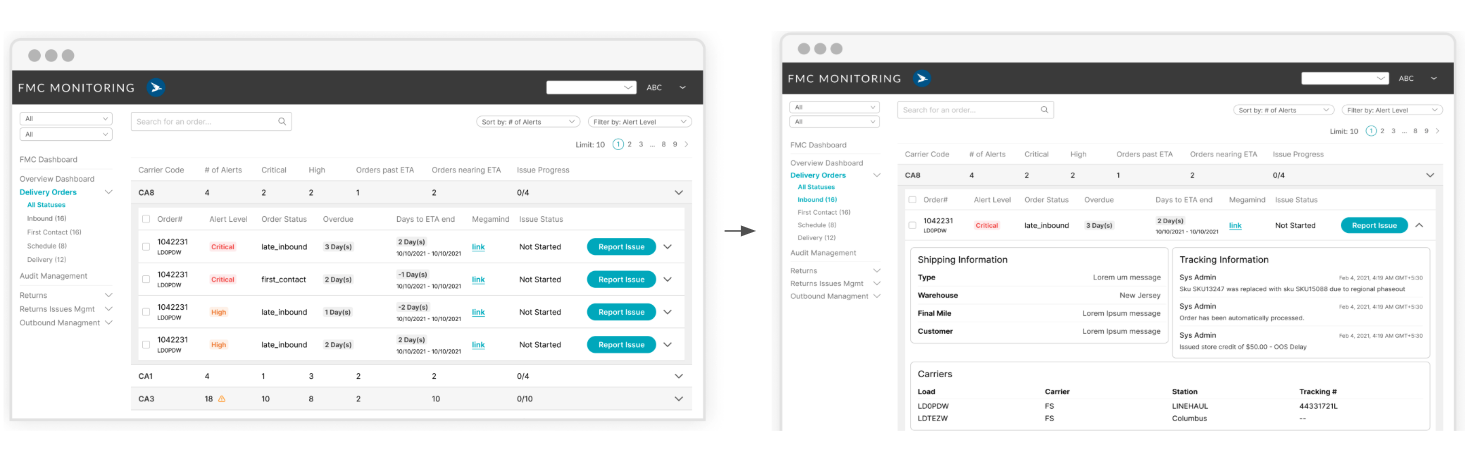
  1. Objective: Replicate manual actions for basic issue management in a more structured system.
  2. Technical Considerations:
    • Defined data structures to ensure scalability.
    • Established relationships between orders and operations.
    • Integrated the new system with the existing order management platform

Iteration 2: Make Issue Management Seamless

Objective: Embed issue management into day-to-day workflows to reduce effort.

Technical Considerations:

  • Designed time and event-based logic for automated issue resolution.
  • Automated reporting to provide real-time updates on 3rd-party performance.
  • Integrated APIs for data transformation using tools like Cleo.

Iteration 3: Reduce Application Overload

Objective: Centralize 3rd-party logistics operations into a single platform.

Technical Considerations:
  • Developed a microservice architecture to decouple operations data and establish a true source of returns information.
  • Implemented event-based triggers for real-time updates.
  • Enhanced reporting and analytics for better visibility.

Article.com - Product Execution (Logistics)

Outcome

The result was the creation of FMC Monitoring, an operational tool that transformed how Article managed its 3rd-party delivery operations. The tool delivered:

  • 20% improvement in on-time deliveries (~50,000 additional orders delivered on time annually).
  • 400+ hours/month saved by automating manual operations.
  • 1,500+ orders/month resolved proactively, reducing customer frustration and reactive resolutions.

Reflections

This project showcased the power of customer-centric problem-solving and iterative product development. By aligning logistics operations with customer needs and leveraging technology to automate and optimize processes, Article significantly improved delivery performance and customer satisfaction. This experience underscored the importance of combining process insights, technical design, and iterative execution to drive meaningful business outcomes.

Article.com - Product Execution (Logistics)
Portfolio home